

What is your Natural Rhythm?
Over the past year I’ve become more aware of my natural pace.
When it’s up to me, my mornings exude a sense of spaciousness. I enjoy waking up without an alarm, often rising around 7:30 a.m. if I’ve gotten enough sleep the night before. I slowly drink a cup of tea then write in my journal and meditate before creating for my blog.
This is the time when my mind is at her sharpest, energized and invigorated by the dawn of a new day. I’m more easily able to focus. I can hear myself think, form cohesive thoughts, and take decisive action. I have the energy to concentrate, so I reserve this time for the most complex tasks of the day.
A few hours later, things begin to shift. By early afternoon my energy has noticeably begun to fade, and I can no longer handle intricate projects with same the efficiency of the morning. So instead, I move to routine tasks, the repetitive ones that require less brain power to complete. I consult my to-do list, assess what can be tackled with ease, and work my way through items step by step.
After dinner my mind feels looser, thoughts fall through the cracks, there’s less energy available to push through. It’s a struggle to be productive or achieve anything concrete. Sometimes I notice bursts of creativity, but this energy is more for daydreaming rather than doing.
This is when I ponder, imagine, and vision. I don’t act but sit with possibilities, sometimes jotting them down before they float away. If I transition to doing, however, I’ll expend more energy than I have, exceeding my capacity and risking depletion the next day.
This is how my day naturally unfolds when nothing external demands I contort my life force. It’s a relaxed sort of rhythm with lots of space, gently flowing from phase to phase. But this wasn’t always how I operated.
Outer Expectations Dictate Our Timing
I didn’t always know how my energy liked to flow, that my ability to focus is more prominent in the morning, that certain tasks are best done during certain parts of the day, that there’s a time to dream yet not default into doing.
And even this pace fluctuates based on the time of year, where I am in my cycle, where the planets are positioned, and according to my own creative urges that surface spontaneously and necessitate a shift in schedule.
“This is my natural rhythm, my own internal ebb and flow, an inner choreography untouched by outside influence and expectation.”
But for a long time, my life followed a predetermined path, largely divorced from any innate sense of timing.
I woke to an alarm and got out of bed, regardless of whether my body was ready to begin the day. I rarely ate breakfast before rushing to work, where I spent 8+ hours forcing myself to focus despite a growing awareness that my mind couldn’t sustain that level of concentration. My evenings were packed with everything else that couldn’t fit into the day: cooking, socializing, exercising, other life tasks.
This pattern unfolded on autopilot, shaped by the constraints of a life that rarely afforded me the privilege of tuning into my own rhythm and honoring what I discovered. Like so many of us, I’d been following what the system demanded since long before I was able to discern what felt correct for me.
This conditioning to disregard our individual timing begins early. In elementary school, we learn to adapt to the school day, eating, playing, and learning when we’re told. This is often our first experience of our lives organized around a seven-day structure with five days at school followed by two days at home. These weeks are then organized into months, and months into years, with school years following their own schedule.
As we become adults and enter the workforce, this pattern only continues. We contort our time and therefore our lives around our employers’ needs, following whatever standardized workday or shift schedule we’ve been assigned. If we’re lucky, we receive holiday and vacation time, parental leave, disability, and even sabbaticals. But this time off requires coordination, approval, and permission; we remain at the mercy of those in charge.
We rarely get to ask what feels right for us, to discern whether living this way honors our physical, mental, and emotional needs, to discover whether another pace better supports our energy.
“We master this collective human rhythm so much so that it becomes normalized, ingrained, unquestioned.”
And with that internalization comes the misconception that rhythm is supposed to look one way, that what’s internally derived is meant to be disregarded when it diverges from what’s been externally imposed. We adapt to the mainstream, losing touch with our unedited tendencies.
The Natural World Moves in Seasons
I wonder how many of us have adopted a cadence that feels unnatural to us, to the extent we don’t fully realize it’s happening. To the extent that we come to believe what’s been imposed upon us is just how we naturally are. To the extent we find it nearly impossible to tell the difference.
But some part of us recognizes this isn’t the natural order of things; we know something feels off. Nowhere else in nature do we see this penchant to contort, morph, and modify. All we have to do is look to the rest of the natural world around us to see how we are living apart from our intrinsic design.
“The seasons impart their own wisdom, quietly teaching us to flow from spring’s new beginnings into summer’s radiant buoyancy, from autumn’s careful preparation to winter’s inner rest.”
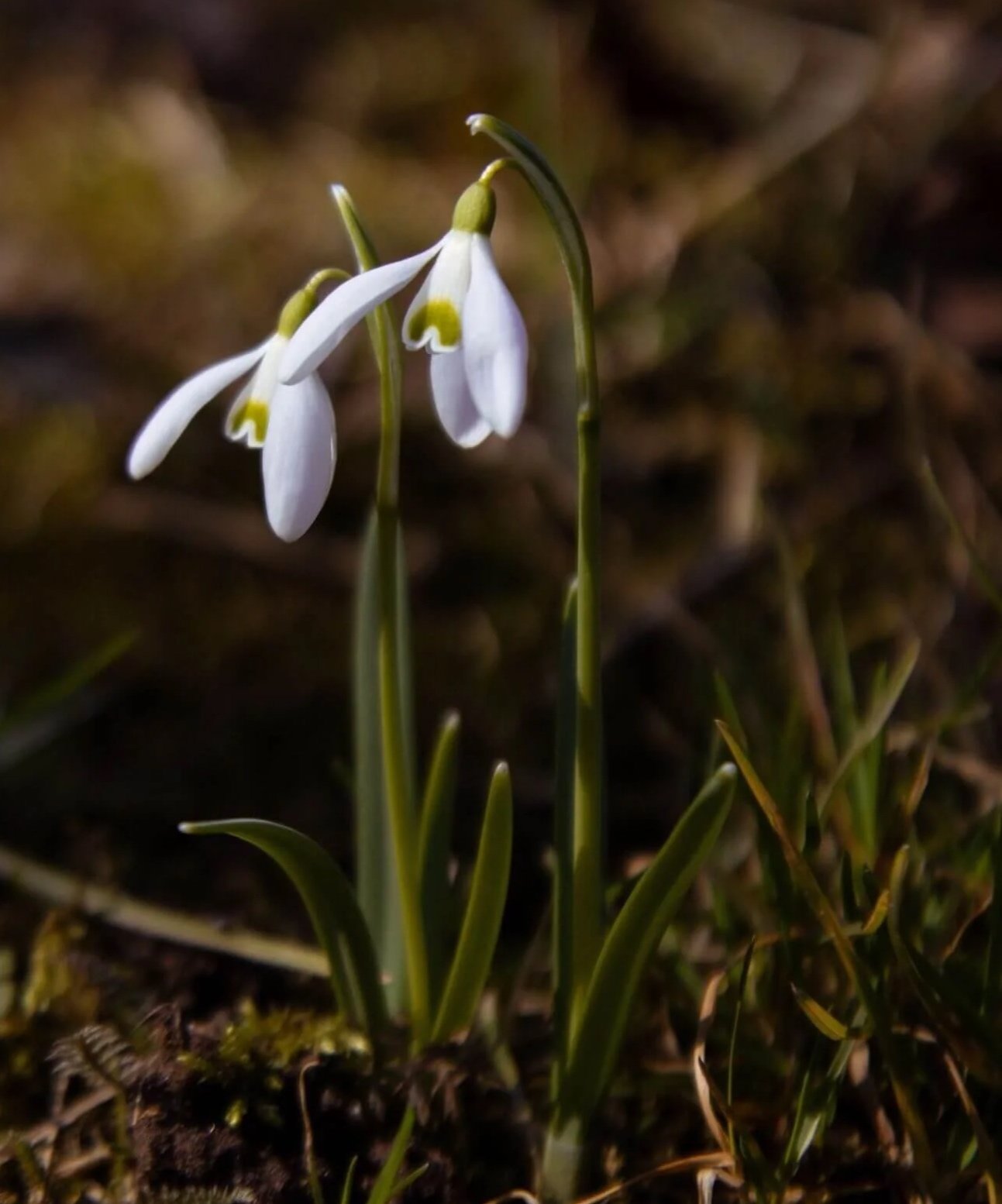
The trees and flowers mimic this cycle; the plants go dormant from late autumn into winter, lying fallow underground and only in spring does new life begin to emerge. Spring’s seedlings blossom by summer, culminating in the fall harvest before beginning the cycle anew.
And the animals follow a similar cycle, adapting to their climate, migrating and hibernating in predictable patterns. They sleep when they're tired, they eat when they're hungry, they play when they need to move. They don't naturally suppress these urges but instead honor the wisdom flowing through them.
The natural world isn’t stuck in a perpetual summer, always on, always going, always thriving at peak bloom. Rest and renewal aren’t treated as optional but rather an integral part of the cyclical nature of being alive.
It’s only humans who live according to a prearranged blueprint, organized to maximize productivity and efficiency rather than our actual human needs.
But we were never meant to live as machines, endlessly moving forward at a consistent pace, days, weeks, and months shaped around a collective yet arbitrary schedule.
Those of us who aren’t fully cut off from our bodies also recognize that we operate cyclically as women, first according to the infradian rhythm of our menstrual cycles, and later according to pregnancy, postpartum, perimenopause, and menopause. Each one of these seasons operates on its own timeline.
And there’s a deeper layer to uncover: each one of us is unique. We all have different rhythms, our own internal ebbs and flows based on our body’s innate inclinations. We each have a way we like to move, a particular cadence that speaks to us. We each possess a particular amount of energy individual to us.
Beyond our human-imposed timelines, these biological and energetic realities nudge us toward a different way of being.
How We Can Reclaim Our Natural Pace
In productivity-oriented cultures, there’s often only one acceptable pace: fast. We’re told to move quickly, efficiently, with the aim of completing and accomplishing. There’s little room to align with what feels natural to us when we’re busy following the same pace as everyone else.
The problems arise when we follow a rhythm that isn’t ours, where we risk burnout and exhaustion stemming from a life at odds with our natural rhythm, when we drain our energy to conform to the standard rather than embodying what feels good and correct for us.
Every time we override our bodies’ knowing or disregard our basic impulses of when to eat, drink, move, sleep, play, and retreat we further distance ourselves from not only our unique rhythm but from the rhythm of all of the living world around us.
Many of us might struggle to identify what’s specific for us; we’ve been taught to intellectualize rather than attune. And this means we’re taught to override when our bodies tell us differently. Re-attuning to your personal rhythm is largely a body-led process; once the mind gets involved, there’s a tendency to overlay what you believe you should be doing rather than allowing what genuinely wants to come through.
It’s only been after allowing myself larger unstructured periods of time where my natural rhythm finally had the space to emerge, to make itself known without inhibition.
If you’re ready to reclaim your natural pace, consider adjusting your morning with intention.
Wake up without an alarm when possible. Notice how many hours of sleep your body actually needs, not what you’ve been told is necessary, but what actually feels restorative to you. What time do you naturally wake up?
As you move through the morning, notice where your energy naturally wants to go. Do you enjoy eating breakfast upon waking or do you need time to work up an appetite? Do you prefer a structured morning routine, or would you rather have space for spaciousness and flow?
What kind of energy do you naturally have early in the day? What kind of tasks are best suited for this time and which ones should be left until later?
If you’re feeling bold, consider dropping any schedule completely and simply create space for your natural inclinations to become apparent.
The conditioning from so many years of outer pacing remains and it takes work to let go and trust in a new more aligned way. Some days as I sit in the early morning relaxing, taking my time, not needlessly rushing, I feel it: that inner pressure to speed up, jump into action, and get things done. I have to remind myself it’s ok to honor my desire to slow down.
If you feel uncomfortable without an outer structure guiding you, remember our bodies move more slowly than our minds. The more you create space for your natural energy to emerge, the more your inner somatic knowing will guide you.
You may not know what your own rhythm looks and feels like yet, but it’s underneath the surface, waiting to be remembered. Once you remember, you may realize your personal cadence doesn’t neatly fit into a structure that aligns with outer expectations. That’s ok. The discovery offers an invitation to realign with your unique pace, one unhurried morning or small moment at a time. How deeply to honor that pace is up to you.
Want to keep reading?
You might also enjoy:
